Posts

Bob & Ray, Ad Men Extraordinare

Image
During their 5 decades of performing together on radio and TV programs, Bob Elliot and Ray Goulding have portrayed befuddled newsmen, quirky interview subjects, didactic soap opera characters another media mainstays.  But of all the targets of their deadpan, underplayed style, one the best has been their commercial parodies.  Sure, that sounds like faint praise, what with the glut of commercial parodies all over TV and the internet these days, but Bob & Ray appropriated the language of advertising with an insightfulness that's easy to miss while you're laughing at their off-kilter dialogue. Their commercials for fictitious sponsor Monongahela Metal Foundry -- "Casting Steel Ingots With The Housewife In Mind"  -- make a mockery of advertisers' attempts at consumer relevance.    Their Einbinder Flypaper slogan -- "The Brand You've Gradually Grown To Trust Over The Course Of Three Generations" -- was a typical heritage-hyping appeal and yet resonat...
The lost epic ... found!

Image
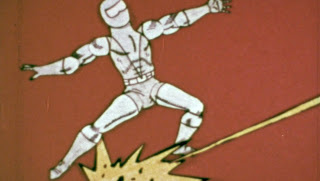
The story of this movie has a surprise ending, one that's more interesting the movie itself  – and was literally decades in the making. In 1974, as a ninth-grader enrolled in Film In The Cities, a filmmaking program of the St. Paul school system, I created an animated film starring my ersatz Spider-Man character, The Human Fly.  I had originally planned to draw it in traditional animation style, cell by cell, but when my instructor figured the cost of acetate sheets for even a short movie, it was suggested that I instead use cutout figures against drawn backgrounds.    After storyboarding a very simple story – the Human Fly breaks up a mugging – I set to work drawing the necessary figures and poses, and hinging their limbs with threads attached to the back of the cutouts.    Over a couple of months, I animated the figures, edited the film, and added a soundtrack of "action" music and sound effects. At my instructor's suggestion, I wrote and recorded a conve...

My friend, Jeff

Image
We all have someone we look up to, someone who inspires and awes you, who motivates and challenges you by their example.   Mine was my best friend.   I met Jeff Vlaming when we both worked in the advertising department of our college newspaper. We hit it off right from the start, and for the next 40 years, we kept each other laughing and endlessly discussing movies, TV shows, books, comics, and music.   I’ve never known anyone else like him, his talent bursting out in all directions at once.    Jeff sold his first TV script while still living in Minneapolis. When he and his wife, Kathy, made the move to California, he beat the odds by getting his first staff writer position on the critical favorite,  Northern Exposure . From there, he moved to  The X-Files  and began a long career writing and producing for many popular sci-fi and horror genre shows, including  Weird Science ;  Xena, Warrior Princess ;  Battlestar Galactica ;  R...

Lois and Ogilvy on The Big Idea

Image
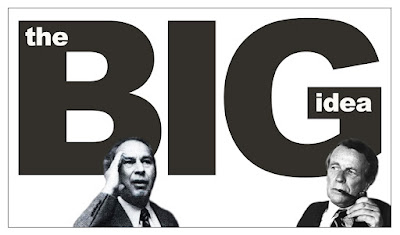
As a panelist on a TV talk show, ad man and creative revolutionary George Lois was once asked to define advertising. After listening to the more scholarly definitions offered up the other ad execs on the panel, George commented, “I think these guys and me are in a different business,” and offered a more blunt, visceral definition.    Lois:  “Advertising is poison gas. It should bring tears to your eyes. It should unhinge your nervous system. It should knock you out.” 1   That’s George in a nutshell. Visceral. Bombastic. But in a less provocative mood, he summed his approach up this way:    Lois:  “The common denominator of all my work is the unremitting quest for The Big Idea, because The Big Idea – a surprising solution to a marketing problem, expressed in memorable verbal and/or graphic imagery – is the authentic source of communicative power … [and] picks up force and speed because its element of surprise changes a habit or point of view.” 2 He capi...

Just re-do it

Image
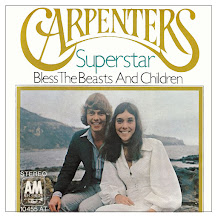
What’s your favorite song by The Carpenters? That would seem to be a simple enough question – but when it comes to the ‘70s sister-and-brother duo, it can be a little more complicated. Because often, you don’t just have to choose a song, you have a choose a version. Richard Carpenter didn’t just sing harmony to his Karen’s lead vocals. As producer,  arranger, lyricist, and composer, he was deeply involved in the production of the tracks – and a bit of a perfectionist. So over the years, as their hits have been re-released, he’s used the opportunity to remix many tracks  to improve sound quality and add new instrumentation and flourishes – on songs like  Ticket to Ride ,  Top of the World , and  Superstar . And it hasn't been just Richard Carpenter re-doing works long after they’ve been completed. Think of Neil Sedaka, re-recording his 1962 bubblegum hit,  Breaking Up is Hard To Do  as a soulful piano ballad in 1975. Or the group Chicago, re-arranging t...

Bill Stein: Critters & Creatures

Image
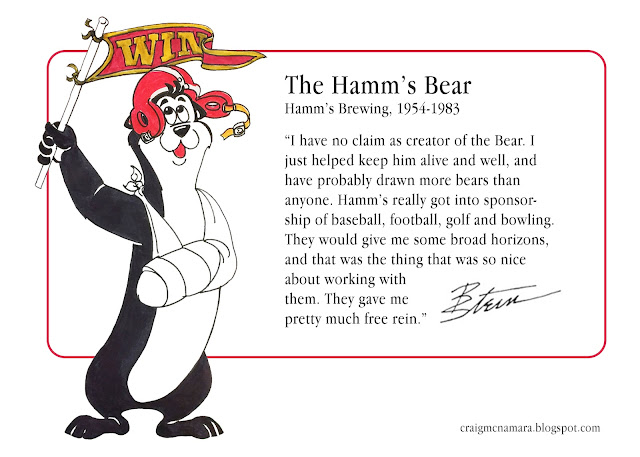
In 2016, I was helping my father-in-law, commercial artist Bill Stein (1923- 2020), prepare for a move by sorting through his flat files of artwork and sketches accumulated over his 60+ year career. Lots of Hamm’s work, naturally, and a drawer filled with Inky Lou posters. But there were other critters and creatures, too – animal and human, whimsical and fantastical.  I hadn't realized how many times Bill had to help brand a company through the personality and antics of an advertising mascot. I put together a booklet for him, "Critters & Creatures," that compiled examples of the characters that Bill had drawn (and in several cases, created), along with his brief memories about each of them. This is my introduction to the collection, along with four of the best-known mascots. * * * In the world of advertising, they’re known as “critters,” the popular pitchmen of the Leo Burnett Company . The Chicago ad agency was behind such 20th Century marketing icons as Tony the Ti...

Brooks' look hooks

Image
One of the goals of an effective ad campaign is a consistent, identifiable look that’s distinctive of the advertiser and can unify the campaign across different mediums and messages. And that can apply to movie posters, too. (And not just for series like Star Wars  and  Indiana Jones .) While reading Mel Brooks' recent autobiography ,   All About Me , which is illustrated with posters of many of his movies, I realized something that I hadn’t, back when the movies came out years apart. Several of the posters for first half-dozen or so movies had a kind of “house-style” to them. In fact, the poster for 1974’s  Blazing Saddles  was the first for designer John Alvin, who would go on to create posters for more than 135 films, including  Blade Runner ,  The Color Purple ,  Beauty and the Beast , and  The Lion King . Alvin di ed in 2008; today, he’s remembered as a “master of the tease,” the image that sells the movie without the hyperbole and hucks...