Posts

Showing posts with the label The '70s

Rebranding a movie

Image
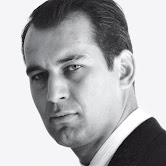
It’s not unusual for a product to undergo rebranding. In fact, one of the most successful was covered on this very blog .    But in this case, the product in need of a new image wasn’t found on a store shelf. It was projected on the silver screen.   In 1973, United Artists released its movie,  The Long Goodbye  to theatres in Los Angeles, Chicago, Philadelphia and Miami. The movie re-teamed director Robert Altman and star Elliot Gould of the box-office hit  M*A*S*H  three years earlier, in an adaptation of the Raymond Chandler noir novel.    “Nothing says goodbye like a bullet,” the movie poster announced, Elliot Gould brandishing a cigarette and pistol, looking as hard-boiled as Humphrey Bogart’s Marlowe in 1946’s  The Big Sleep.   And the audience stayed away in droves.    When the limited release ended, United Artists pulled the film from its next opening in New York and, baffled by the apathy of audiences (and the host...

The focus group loses focus

Image
Although Santa Claus has been around in different forms for centuries, much of how we think of that Jolly Old Elf today was established in 1822 by Clement Clark Moore’s poem, “’Twas The Night Before Christmas.”   But what would Santa Claus be like if he was created today?  How would today’s culture shape his personality and modus operandi?   First, let’s consider Santa himself: an older, whiskered, rotund fellow.  This is never going to fly (so to speak). After all, ours is a society that worships youth and is obsessed with fitness. As for the facial hair, well, maybe if you’re Paul Bunyan, okay, but not for someone on whose lap we’re going to place little Dylan and Brittany. He’ll have to lose the beard, a few pounds and a lot of years.   And isn’t Santa just a little too much of goody two-shoes for today’s tastes?  Sure, we still want heroes, but we like them a bit less than pure. Makes them easier to relate to. So let’s give him a rough ex...

The lost epic ... found!

Image
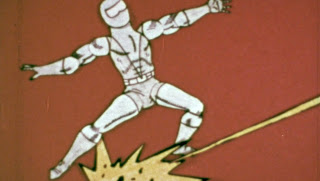
The story of this movie has a surprise ending, one that's more interesting the movie itself  – and was literally decades in the making. In 1974, as a ninth-grader enrolled in Film In The Cities, a filmmaking program of the St. Paul school system, I created an animated film starring my ersatz Spider-Man character, The Human Fly.  I had originally planned to draw it in traditional animation style, cell by cell, but when my instructor figured the cost of acetate sheets for even a short movie, it was suggested that I instead use cutout figures against drawn backgrounds.    After storyboarding a very simple story – the Human Fly breaks up a mugging – I set to work drawing the necessary figures and poses, and hinging their limbs with threads attached to the back of the cutouts.    Over a couple of months, I animated the figures, edited the film, and added a soundtrack of "action" music and sound effects. At my instructor's suggestion, I wrote and recorded a conve...

Still waiting for that rejection, 40 years later

Image
I grew up in the WJM newsroom. I had dinners with the Bunkers. I hung out with the wacky doctors of the 4077 th .     Yes, I was a kid raised on  The Mary Tyler Moore Show ,  All in the Family ,  M*A*S*H , and so many, many other classic sitcoms of the era. I knew their characters and their dreams, their homes and their workplaces. I knew them like you know family. Which, in a way, they were.    So during college, when my friend, Jeff, who’d written a movie screenplay, pushed me to try writing one too, I didn’t attempt a movie. Writing a movie from scratch – creating characters and a plotline that could sustain 120 pages of story – seemed intimidating. But being a longtime fan of sitcoms, I had both an affinity for and inherent understanding of the form.    And I knew which show I would choose.  At the time, I was drawn to the nightly reruns of Barney Miller . Set in New York City’s 12 th  Precinct, the show involved a squad room of...

Face to face with my Surdyk's ads

Image
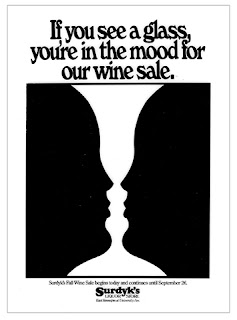
A few months back, I was contacted by David Wojdyla, creator and curator of a blog commemorating the life and career of Ron Anderson, the storied creative director of Bozell Advertising and "the godfather of Minneapolis advertising." David and I both worked for Ron at different points, me in the 1980s as a copywriter in Minneapolis, and him in the 1990s as an executive creative director in New York. (Today, David is co-founder of ANDvertising Inc. in Chicago. When David was looking for new material for the blog, he came across one of my award-winning Bozell ads for Surdyk's liquor store and asked me if I had other Surdyk's ads he could show. It seemed a little presumptuous to show off my work on a blog about Ron  –  but maybe not if I put it in the context of an advertising approach first laid down by Ron (and his copywriter partner, Tom McElligott) a decade earlier. The link to my post is below  –  but if  you aren't familiar with Ron Anderson, his care...

What's the Big Idea, George?

Image
A big inspiration to me in the later stage of my career  (why did it take me so long?)  has been George Lois , advertising legend and self-described creator of "The Big Idea." (And it's not just his ideas. Everything about George Lois is larger than life.) About 10 years ago, I put together a short presentation on some of his notable "Big Ideas" that looked beyond just an ad and made greater impacts on consumers and the marketplace. Take a look; maybe you'll be a fan, too. George Lois and the Big Idea.pdf from Craig McNamara

The (near) naked truth

Image
You combine with the loosening sexual mores of 1972 with the mainstreaming of the "male centerfold" (following movie star/sex symbol Burt Reynolds appearing au natural in Cosmopolitan that same year) and this -- unfortunately -- is what you get: Real socks appeal, fellas. Yes, what better way to show off your socks than by removing all those other distracting clothes? Or, more to the point, what better way to draw attention to your ad than by highlighting it in context of one of the most provocative images allowed in mainstream media of the era? (Showing women nude or with implied nudity had been fairly common in advertising since at least the '50s .) But back to the Cosmo influence: After some 80 years as a family magazine, then-new editor Helen Gurley Brown reoriented the magazine in the early 1970s, to a focus on the interests of sexually liberated young women. Women finally get equal rights to objectify the opposite sex. Probably nothing epitomized the magazine...

What's really behind the smoke?

Image
Here's an early-1970s ad that seems to have sparked a lot of "outrageously outrageous outrage" on some sites around the web: "It's rude/it's sexist/it's unhealthy" goes the shocked, shocked criticism of this ad -- which, seen in the context of the times, seems as about as pointless as sneering at it for its pro-smoking advocacy. What I found interesting was reference point for the headline. "Blow in her face and she'll follow you anywhere" wasn't just referring to the fruit-flavored tobacco (which, the ad presumes, she'll find aromatic). It's a paraphrasing of a catchy come-on -- "Blow in my ear and I'll follow you anywhere" -- that was popularized by 1969's and 1970's #1 TV show, " Laugh-In ." Used as both a pickup line and a punchline, I seem to recall even Dick Martin using it in his routines with partner Dan Rowan. Finally, before we leave this Tipalet ad behind, in its defense, may I...

Picking a fight over female boxers

Image
It's a thin thread on which to hang this presumption, but is there something more behind this 1979 ad than just a pugilistic image to represent tougher nails? Now, I admit that the idea of casting an ad model as a boxer wasn't new, and pre-dated even the post-women's lib era, as seen in this 1961 Maidenform ad : But is it merely a coincidence that 1979 was also when this Barbra Streisand movie was released, and became one of the year's top grossing movies? (And yes, the only time Streisand's character got in the ring was to verbally spar with the fighter she "owned," played by Ryan O'Neil -- but as the poster above makes clear, the movie's publicity all about putting Ms. Streisand into boxing imagery.)

Where's Gladys?

Image
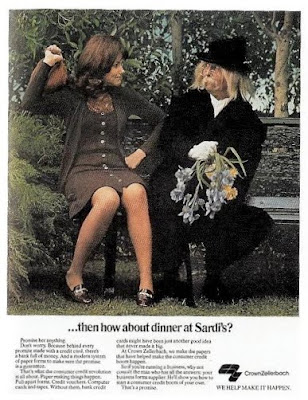
This one's too easy. A 1974 ad from paper manufacturer Crown Zellerbach: "Promise her anything," the ad begins, assuring the reader that "behind every promise made with a credit card...there's a modern system of paper forms to make sure the promise is a guarantee." (This is pre-analog and pre-digital transmission of data.) All well and good, I suppose, but what, you're wondering, is the point with the photo and headline? Actually, if you were watching TV back in the early '70s, you already know what the point is. The photo is a clumsily staged knock-off of a popular " Laugh-In " skit featuring series regulars Ruth Buzzi and Arte Johnson: Here's how Wikipedia explains it: ...dowdy spinster Gladys Ormphby, clad in drab brown with her bun hairdo covered by a visible hairnet knotted in the middle of her forehead. In most sketches, she used her lethal purse, with which she would flail away vigorously at anyone who incurred her wrath. On ...

Off by 30+ years (but who's counting?)

Image
Automatic highways. Computerized kitchens. Person to person television. Food from under the sea. And all in just ten years! Or not. We're getting closer to the realities predicted in this 1969 ad -- some 30 years behind schedule -- but we're still not all the way there yet. (click for a better view of the future we're still waiting for) Check back in another decade or so.

Talking back to "The Man"

Image
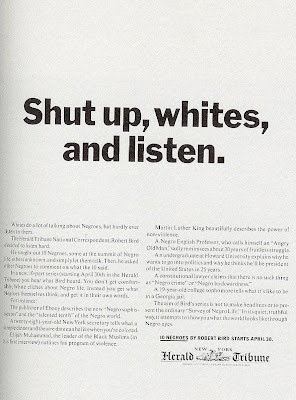
Several months back, this blog looked at a couple of ads from the 1960s that grappled with the social upheaval of the period by trying to see things (if occasionally awkwardly) from the "black perspective." Today, let's see how the media addressed similar topics when speaking more to their "white" audience. And right off the bat, we see a more confrontational attitude designed to put the reader on the defensive: The above 1963 New York Herald Tribune ad begins with the statement that "Whites do a lot of talking about Negros, but hardly ever listen to them. The copy continues its aggressive tone by telling us what not to expect: You don't get comfortable, White cliches about Negro life. Instead, you get what Negros themselves think, and get it in their own words. (Don't be offended by racial labels; those were the terms of the times.) Almost a decade later, society's continuing struggle with racial issues (along with family and sexuality is...